Jungian analysis, psychotherapy, clinical supervision, Brighton, Sussex, and online.


About Me
I am a Jungian analyst and psychotherapist with over thirty years experience in private practce. My work is primarily shaped by the psychology of Carl Jung and its developments; my initial training was integrative psychotherapy. I offer Jungian analysis as well as psychotherapy, according to what feels possible and appropriate for each person at a given time.
I work both in person and online with people in the UK and internationally when meeting face to face is not feasible.
I am registered with the British Psychoanalytic Council (BPC) and the United Kingdom Council for Psychotherapy (UKCP), and am a member of the International Association of Analytical Psychology (IAAP).
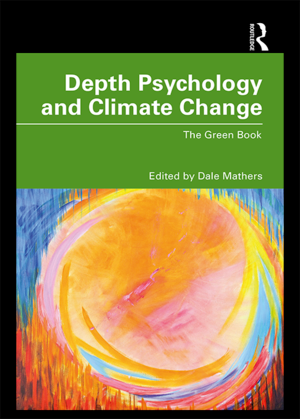
Depth Psychology and Climate Change - The Green Book
Chapter 9. At war with the natural world: nature as Other
Edited By Dale Mathers and published by Routledge.
If you're interested in buying this book click here
"Depth Psychology and Climate Change offers a sensitive and insightful look at how ideas from depth psychology can move us beyond psychological overwhelm when facing the ecological disaster of climate change and its denial. Integrating ideas from disciplines including anthropology, politics, spirituality, mythology and philosophy, contributors consider how climate change affects psychological well-being and how we can place hope and radical uncertainty alongside rage and despair."
"This book will be essential reading for analytical psychologists, Jungian analysts and psychotherapists, as well as academics and students of Jungian and post-Jungian studies"
Jungian analysis and Psychotherapy
Counselling has become something of a generic term. The work I offer is usually a longer‑term, depth‑oriented psychotherapy, suitable for people who feel that brief or problem‑focused approaches have not addressed the underlying patterns shaping their difficulties.
Some people come specifically seeking Jungian analysis, while others come looking for psychotherapy and later discover that a Jungian approach speaks to their experience. Psychotherapy and Jungian analysis are related but distinct. Jungian analysis involves a deeper and more sustained commitment to psychological exploration and personal development, and details of this are outlined on the separate Jungian analysis page.
“Until you make the unconscious conscious, it will direct your life and you will call it fate.”
— Carl Jung
Areas I work with
I work with individuals presenting with a wide range of difficulties, including anxiety, depression, bereavement and loss, eating difficulties, abuse, childhood trauma and emotional neglect, attachment issues, and repeated relationship difficulties.
Many people I see struggle with relationships — sometimes sensing that early experiences, including childhood trauma or disrupted attachment, continue to shape what they expect of others or how safe closeness feels. Others describe loneliness, difficulty trusting, or a sense of being locked into repeating patterns that feel impossible to change.
Stress and anxiety are common experiences, often appearing in different forms over time. Loss, too, is an inevitable part of life. Unresolved feelings relating to earlier losses can accumulate, making later experiences such as bereavement, redundancy, or relationship breakdown particularly hard to bear.
At times, an emotional crisis or the emergence of irrational fears can leave a person feeling overwhelmed and unable to cope. Such experiences often have complex roots and require careful and sensitive therapeutic work.
Therapy
Childhood trauma, attachment, and relational patterns
Complex childhood trauma — often involving emotional neglect rather than obvious events — can be difficult to talk about. Its impact may emerge indirectly, through anxiety, emotional reactivity, difficulty trusting, fear of abandonment or intimacy, or a persistent sense of being unsafe.
In therapy, these experiences are approached gradually, within a trusting therapeutic relationship and at a pace that feels manageable.
Difficulties relating to attachment, early relationships, and emotional safety are not treated as flaws, but as understandable adaptations to earlier environments.
Read more about working therapeutically with Childhood Trauma and Attachment Issues →
Eating difficulties and compulsive behaviours
Through my work in private practice and previously at Capio Nightingale Hospital in London and the Priory Hospital in Chelmsford, I have extensive experience working with eating disorders and disordered eating, including anorexia nervosa, bulimia, binge eating, and compulsive eating.
Eating difficulties often exist on a spectrum, and people may move between different positions on that spectrum over time. Such difficulties are frequently connected to deeper emotional and relational struggles rather than food alone.
Read more about working therapeutically with eating disorders →
Abuse
Experiences of abuse—whether emotional, physical, sexual, or coercive—can leave long‑lasting impressions on a person’s sense of safety, trust, and self‑worth. The effects are often complex and may surface years later through anxiety, relationship difficulties, shame, or a persistent feeling of being on alert.
Therapy offers a confidential and steady space in which these experiences can be approached gradually and at a pace that feels manageable. The work is not about reliving trauma, but about understanding its impact and supporting the possibility of a more grounded, self‑directed life.
Read more about working therapeutically with abuse →
DEPRESSION
Depression can feel like a loss of vitality, meaning, or inner connection. For some, it appears as exhaustion or emotional numbness; for others, as self‑criticism, hopelessness, or a sense of being cut off from one’s own instincts. From a Jungian perspective, depression is not simply a set of symptoms to be removed but a signal that something in the psyche is asking for attention.
Therapy provides a space to explore this experience in depth, understand its roots, and support the gradual emergence of renewed energy and direction.
Read more about understanding and treating depression →
Clinical Supervision
I offer clinical supervision to psychotherapists, counsellors, and other mental‑health practitioners seeking a reflective, depth‑oriented space to think about their work. Supervision includes attention to clinical process, transference and countertransference, ethical considerations, and the practitioner’s own symbolic and emotional responses.
Whether you are newly qualified or experienced, supervision can support the development of your clinical judgement, confidence, and capacity to work with complexity.
Read more about my approach to clinical supervision →
ADDICTION
Addiction is often less about the substance or behaviour and more about the emotional pain it tries to soothe — feelings of shame, loneliness, trauma, or inner emptiness. From a Jungian perspective, addictive patterns can be understood as a protective but ultimately self‑defeating response within the psyche, rather than a personal failing. In therapy, we explore what the addiction is trying to shield you from, working gently with the underlying wounds and conflicts that make life feel overwhelming. This compassionate, reflective process can gradually loosen the grip of compulsive cycles and support a more grounded, meaningful, and self‑directed way of living.
Read more about my approach to addiction therapy →
Beginning therapy
You may arrive with a clear sense of what is troubling you, or with only a vague feeling of being blocked, limited, or lacking meaning. Some people describe feeling emotionally unsafe, on edge, or overwhelmed; others feel stuck in repeating patterns, creatively blocked, or disconnected from their inner life.
I invite you to make contact so that we can think together about what might be most appropriate for you. Jungian and psychotherapy both offer spaces in which difficulties can be understood in depth and over time.
Sessions are offered in person in Brighton & Hove, and online via Zoom where appropriate.
LINKS
Sarah Hall Cornwall www.phoenixpsychotherapy.co.uk/
Telephone: 01579 349760 https://brightonandhovetherapyhub.co.uk/
Eating Disorders.
B-eat is a UK wide charity providing information, providing help and support for people affected by eating disorders and,in particular, anorexia and bulimia nervosa.
Eating disorders expert is a a very comprehensive public interest website focused on eating disorders; diagnosing, signs, causes, risks and treatments.
Drugs and alcohol.
Adfam is an organisation for relatives and friends concerned about the use of Drugs or Related Behavioural Problems
Turning Point has been at the cutting edge of the struggle to help people with problems relating to drink, drugs, mental health and learning disabilities to build a better and more independent life, for over thirty years.
Talk to Frank gives information and advice to anyone in the UK concerned about drugs. This includes drug users, their families and friends and people who work with them.
Depression.
Depression UK are a National Self-Help Organisation helping people cope with their depression.
Samaritans is a charity based in the UK and Republic of Ireland that provides confidential emotional support to any person who is suicidal or despairing.
Anxiety and phobia.
Anxiety UK is the main UK charity supporting suffers of anxiety and phobia. It was formed 30 years ago by a sufferer of agoraphobia for those affected by anxiety disorders. Still a user-led organisation, run by sufferers and ex-sufferers of anxiety disorders.
Severe mental illness
Sane from its initial focus on schizophrenia, SANE developed and is now concerned with all mental illnesses. It provides information and emotional support to those experiencing mental health problems, their families and carers through SANELINE 0845 767 8000 open from 12noon to 2am.
Rethink is the new operating name for the National Schizophrenia Fellowship. Working together to help everyone affected by severe mental illness, including schizophrenia, to recover a better quality of life.
Get in touch
I work with people in and around my local area of Brighton Hove and Sussex, but also nationally and internationally via Zoom.
Feel free to contact me if you have any questions about how psychotherapy or Jungian analysis works. This enables us to discuss the reasons you are thinking of coming to therapy, whether it could be helpful for you and whether I am the right therapist to help.
You can also call me on 07957 318423.